The theme of masculinity that was assigned to me was aggressiveness. Masculinity is a theme that represents willingness to take physical risks and become violent if necessary, to have access to something or to get something that they can’t get without being tough. In most cases, masculinity would always get comments like “don’t be feminine, be tough, gain power”. I picked tom in tom and jerry since it is a perfect example of someone aggressive.
Tom and Jerry was an animated series created in 1940 during the golden age ofAmerican animation, which started in 1928. Tom and Jerry is based on a slapstick comedy. Tom in this series represents aggressiveness since he would always use power whenever he would get pissed by jerry. Tom wouldn’t be able to catch jerry so he would get upset whenever he sees him again and the only thing, he had in mind was to use force and power to catch him but he would never be able so he would always try again and again. Masculinity is the same thing, once u can use power, you always want to use it since you that you can get way more with power.
Harry Styles was born on February 1st 1994 and gained fame through his former band One Direction. He’s been a prominent figure in the music industry for the last decade, having set records with his group thanks to their immense following.
I think he’s a perfect counter example of anti femininity. In the text, it is said that boys are taught to avoid “feminine” behaviours or interests as well as avoiding showing signs of emotion to appear “weak”. Harry Styles has been praised time and time again for being so bold when it comes to his fashion choices. He’ll wear clothing that doesn’t traditionally appear to be “for men” but rather something that he feels comfortable in that expresses what he’d like to show. He’s also stated in the past that his fashion inspiration is actually Shania Twain.
He’s very in touch with both his masculine and feminine sides which make him overflow with confidence onstage and offstage.
Additionally, he does not shy away from talking about his feelings. He’s a very open man and speaks highly of his female audience in interviews. He’s an open advocate for the LGBT community and usually picks up a few flags and will wave them around onstage during his tours.
Harry Styles strays away from a “normal” man’s man and follows his desires. His fearlessness in being authentic is what makes him so lovely. Again, this is why he is a wonderful example of anti femininity.
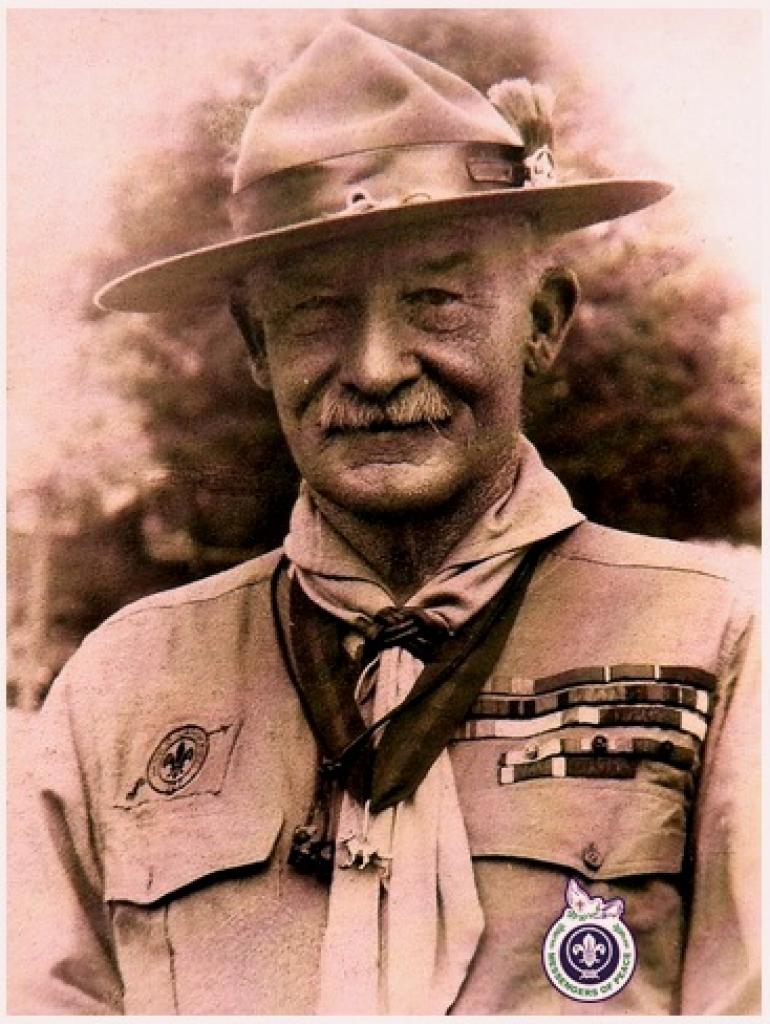
A good example of a successful man in his status and achievement is my inspirational man “The Lord Steven Smith Baden Powell ” .
Robert Baden-Powell (1857-1941) was a military officer who helped protect Britain’s imperial empire for over 30 years. He was especially talented in military scouting. Baden-Powell was a prolific writer who often chose his military experiences as the subjects of his works. He is best known for starting a worldwide scouting movement.
Robert Baden-Powell was born Robert Stephenson Smyth Powell on February 22, 1857 in his parents’ house in London, England. His father, Professor H.G. Baden Powell was a vicar and a professor of natural science. His mother, Henrietta Smyth, was Professor Baden Powell’s third wife. The couple had seven living children together, of whom Robert was the fifth, and they also raised three children from the vicar’s previous marriage. Baden-Powell’s father died just after his last child was born, when Robert was only three years old. In 1869 Henrietta changed the family name to Baden-Powell out of respect for her late husband.
Mrs. Baden-Powell educated her children in the outdoors. Through long walks in the country, she taught them about plants and animals. They were also allowed to read books from their father’s collection on natural history. Baden-Powell’s formal education started with a Dame’s School in Kensington Square. In 1868 he attended the Rose Hill School in Tunbridge Wells, where his father was also educated. Two years later he won a scholarship to the Charterhouse School in London. In 1872 the school moved to Godalming, which was surrounded by woodlands known as “The Copse.” The wilderness was an important part of Baden-Powell’s childhood experience. As a schoolboy, he did not excel either academically or athletically. He was mainly interested in the outdoors and theater.
It was during this last appointment that Baden-Powell really began to develop his ideas about the scouting movement. In 1904 he attended the Annual Drill Inspection and Review of the Boys Brigade in Glasgow, where the founder, William Smith, had recruited over 54,000 boys. Smith had asked Baden-Powell to rewrite his book Aids to Scouting for a younger audience. According to Michael Rosenthal in The Character Factory, this gave Baden-Powell “the vision of a British society made strong by legions of well-disciplined, morally upright, patriotic youth who found their satisfaction in defending the interests of the empire and following the orders of their superiors.”
Since Baden-Powell was still occupied as inspector general of the cavalry, it took a few years to put his ideas into action. In 1906 he wrote a short paper called “Scouting for Boys,” where he put some of his ideas into print. His vision for scouting was strongly influenced by three of his contemporaries, William Smith, Ernest Thompson Seton, and Dan Beard. Seton and Beard had started similar youth organizations in the United States. This small paper turned into a six-part series called Scouting for Boys, which was published between January and March of 1908. The series included the first publication of the Scout Oath and Scout Law. This series then led to an official weekly magazine, called The Scout, which increased the visibility and appeal of the scouting movement in the public’s eye.
In the summer of 1907 Baden-Powell acted upon his ideas and ran a demonstration camp for boys on Brownsea Island off the coast of Dorset. Twenty-two boys, from ages 10 to 17, took part in the weeklong exercise, which consisted of camping, cooking, tracking, singing, and storytelling. This was the beginning of what was called “unquestionably the most significant youth movement of the twentieth century ” in Michael Rosenthal’s The Character Factory.
Brannon’s Themes of masculinity in terms of status and achievement do fit when describing the contribution ,rank and achievement of Lord Baden Powell because Baden Powell was a successful man in his achievements and his major achievement is creating the first and the most important youth organization in the world , his achievement of founding this amazing educational movement that educate millions of youth around the world , and the fact that the system of the scout is similar to the system of military is very unique to Baden Powell .
Even if Baden Powell had passed away but still his achievement and contribution remaining to remind us of his rank and importance work and dedication to the education of youths.
Baden Powell wrote a lot of books that we still relay on it in the education and progression of our youth in the scout and those books are:
Baden-Powell was regarded as an excellent storyteller. During his whole life he told “ripping yarns” to audiences. After having published Scouting for Boys, Baden-Powell kept on writing more handbooks and educative materials for all Scouts, as well as directives for Scout Leaders. In his later years, he also wrote about the Scout movement and his ideas for its future. He spent most of the last two years of his life in Africa, and many of his later books had African themes.[11]
Throughout history it was always typical that men have more rights than women, higher positions, higher salaries, were almost always for men. But as times went by, women were slowly starting to be heard more, but it still wasn’t enough. There were still people who were old minded believing in the same old principals that men should always have the higher hand in everything.
First-wave feminism was a period of activity during the 19th and early-20th centuries, women started fighter harder and stronger for equal rights. Since then they have been heard more, people from every position have started supporting them, even some presidents claimed to support the act like Barack Obama. His support of this claim gave women more opportunities to spread their message around America and even to the world.
But since he resided from his position as a president, Trump being a stereotypical anti-feminist has taken his place. When he was asked about supporting feminism, he simply said that to be with women is to be against men. In addition to that, there were many interviews of him trashing women and calling them inappropriate words. He also has been accused by several women of sexual misconduct which he hasn’t been interrogated about since he is of course the president of the united states, meaning that he still has the upper hand in everything he does.
But in opposition to him, a lot of women didn’t vote for him and have continued fighting for their rights. Which, in my opinion, have succeeded in shutting his views in women and letting them do what they want because he knows that if he tries to do something to stop them, they, among men and even other countries, will not let him do that without fighting their hardest.
“Stoick the vast” is a main character from the movie series How to train your dragon. Captain of his village, Stoick feels the need to stay as strong and fearless as possible. As described by Kimmel in his text, a man shouldn’t demand for help when faced with an issue (Kimmel, 5). This statement is closely linked with Stoick’s everyday life in that he must never be unsure about a certain situation, ensuring that his village stays calm. While he loves his son deeply, Stoick struggles to accept his son’s friendship with a certain dragon. Seeing his son become affectionate with the dragon, Stoick believes his son is “too weak” to be a viking. While re-reading through Kimmel’s definition of inexpressiveness and independence, I felt as though Stoick was being described word for word. Specifically where he says, “Men should be strong, sturdy, independent, and in control of themselves” (Kimmel, 5). Stoick is simply the perfect example of Kimmel’s claims, he is big, powerful, fearless and stubborn. Being close minded definitely helps stoick fit Kimmel’s mold of independence. His stubbornness allows him to look and feel in control, even in the most stressful situations. Having lots of responsibilities as the captain of his village means he must never flinch. When his ideas are challenged by others, Stoick erupts in the only emotion he is not capable of hiding, anger. When he loses control, Stoick turns to coercion and fear to get his point through… As his name suggests, “Stoick the vast” is a hard headed man who believes in himself more than anyone else. He can only do things on his own and refuses help from others. Stoick is a great example of what Kimmel calls inexpressiveness and independence.
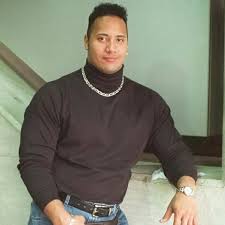
Dwayne Douglas Johnson (born May 2, 1972), also known by The Rock. He is an American-Canadian actor, producer, investor and retired Pro wrestler.Dwayne “The Rock” Johnson is known as one of Hollywood’s tough guys and top earners, but the former wrestler-turned-actor recently shed light on his battle with depression over the years.The former Calgary Stampeders football player revealed that his depression reached its peak years later when a series of injuries led to him being cut by the CFL. Not long after, Johnson’s girlfriend left him. “That was my absolute worst time,” Johnson said. “I reached a point where I didn’t want to do a thing or go anywhere. I was crying constantly.”
Johnson made his WWF debut in 1996, fighting under the shared moniker of his father and grandfather’s names, “Rocky Maivia.” As fate would have it, he would square off against the Brooklyn Brawler who was also the first opponent of his father at a Superstars taping in Corpus Christi, Texas.The Rock dominated wrestling coverage and story lines for the better part of a decade finding the charismatic pugilist holding the WWF/WWE championship belt eight-times during that stretch. But Johnson wanted something more; a chance at Hollywood stardom.
He rose to prominence after developing a charismatic persona of a boastful trash-talking wrestler named The Rock. Johnson had his first acting role in The Mummy Returns (2001), and played his first lead role in the spin-off The Scorpion King (2002) and many more.His films have grossed over $3.5 billion in North America and over $10.5 billion worldwide, making Johnson one of the most successful and highest-grossing box-office stars of all time.
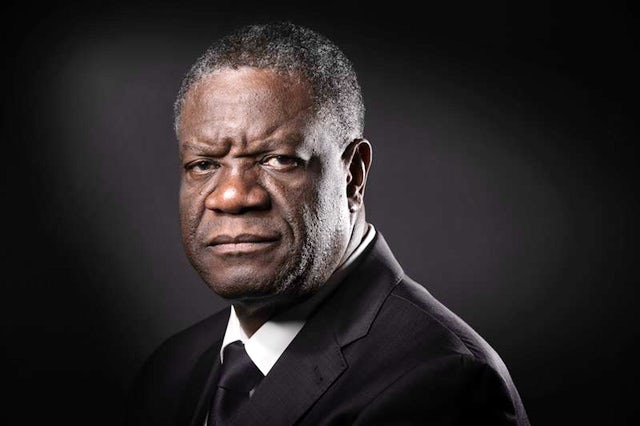
If Antifemininity can be described as a lack or a rejection of the feminine needs and interests, this man is the complete opposite of what an antifeminist. The man on the picture is Denis Mukwege, a congolese gynecologist, born in 1964. He specialised himself in the treatment of women victims of rape by the armed rebels. He is the opposite of the stereotypical man that feels superior than women. In an era where many societies tolerate rape culture, Denis decided to do something against the problem. His actions are even more commendable because he operates in one of the most deprived area of the world.
In the article of we read, Antifemininity translates in a need to avoid profession considered as feminine. And for many, gynecologist is considered as a feminine job since it is directly related to women. Antifemininity is also not caring for women’s needs because it could makes man look feminine or even gay.
In conclusion, I consider Dr. Denis Mukwege a perfect counter-example of antifemininity. He didn’t gave importance to stereotypes and clichés and did what he think was good no matter what people said. He decided to help women and understood their needs.
Stoick Haddock, more commonly known as Stoick the Vast, is the chief captain of the village in the How to train your dragon movie series. He is a big, strong Viking who feels a large sense of responsibility to the village of Berk and keeping it safe from dragons. Even if he is strong, very brave and protective towards his fellow Vikings, he has many flaws that can’t be overseen. Firstly, he is very stubborn and closed-minded. He feels that everything must be done his way and everyone must think like him. This can mostly be seen by his relationship with his son, who is friends with a dragon. Because of this relationship between the dragon and the boy, he sees his son as weak and “not a real Viking”. He doesn’t care about the boy’s feelings and won’t listen to his point of view. Secondly, as his name implies, he is quite stoic. He doesn’t want people to see him weak or sad. Instead, he gets angry and does something without listening to others to seem more manly. Thirdly and lastly, going on the last point, Stoick does not know how to act emotionally. He often says mean and detrimental things without knowing the harm it can do to others. That being said, he evolves and gets much better in all of these areas as the movie and TV series advance.
We found that this fictional character’s habits correlate well with Kimmel’s definition of masculinity in the section of inexpressiveness and independence. This characteristic of masculinity states that men should show no sign of weakness. Stoick never shows the side of him that can be weak or hurt. He never shows any sadness or physical weakness. Instead, he gets mad and displays his strength to look strong and manly. As said in Kimmel’s book, men have “strength of belief, dedication (to a cause) or stubbornness.” Stoick the Vast is very stubborn and close-minded, which fits perfectly with the description. Especially at the beginning of the movie series, he is the typical Viking who won’t take advice from anybody and would rather fight than try to debate and listen to others. He also will not listen to his son, who has a different view on dragons than him. This makes him hard-shelled and stubborn.
The theme of masculinity that was assigned to me was Status & Achievement. This theme is represented by men who always win, who succeed in everything in every field (women, money, family, etc). It’s represented by men who think everything is a competition, and don’t ever do something only for their good. Gandhi is the opposite of all of that, and that’s why he is the person I chose.
Mohanas Karamchand Gandhi was an Indian lawyer. He used non-violence to lead India’s Independence. He is born October 2, 1869 and he died January 30, 1948. Everything Gandhi did was for his country. He was not someone competitive, someone who wanted a lot of conquests, etc. He didn’t care about all of that, all he wanted was peace in his country! He is the absolute opposite of what men are ‘’supposed’’ to be, the opposite of what we can read in Status & Achievement. Gandhi was respected all over the world because he made a difference in the life of a country, and that’s why I chose him.
In conclusion, I chose Gandhi for this blog because like I said previously, he is the opposite of what I read in the theme of Status & Achievement. He is someone good, someone who does everything for himself and his country, he doesn’t care about the competition, conquests or even gaining other men’s respect.
Shawn Mendes, also known under the name of Shawn Peter Raul Mendes is a Canadian singer. He is born on August 8, 1998. Despite his age, he is a talented artist. In 2013, he started sharing cover videos on various platforms. After a couple of month, his reputation skyrockets. At first, he decided to share his videos to pursue his passion. But later on, he got the opportunity to built his career with a professional company.
According to Kilmartin and Smiler’s textbook The Masculine Self, “Masculinity is characterized by a willingness to take (physical) risks and become violent if necessary.” Shawn Mendes is a good counter example because he is friendly and passionate. He is a singer that pursue his passion based on his own interest. Additionally, he will consider his fans perspectives because they are the ones that supported him from the beginning of his career. In an interview, he mentioned that “My goal isn’t to become an artist, but it is to become what my fans want me to become”. Apart from that, his music genres and styles are leaning towards “soothing love songs”. He expresses his feelings through the lyrics and through his voice. He is the opposite of what Kilmartin and Smiler’s definition of masculinity.
Relating to both the documentary and the textbook, on 2018, Shawn Mendes was criticized by his feminine behaviour:
“Mendes denied gay rumours, but they kept coming. Now he’s discussed the impact they had on him; in aRolling Stone profile he said speculation made him obsessively police his own behaviour (“maybe I am a little more feminine – but that’s the way it is”), and it exacerbated his own internalised homophobia. “In my heart I know that [being gay is] not a bad thing,” he says.”
This is an interesting insight because in contrary with the documentary, even though he was being criticized by the society, he didn’t let it ruin him. He accepted himself and he didn’t let the rumours affect himself. On the other hand, he is a perfect counter example because he is the opposite of what the textbook defined as masculinity. He doesn’t show any signs of aggressiveness or violence.
In conclusion, I don’t think that there are specific qualities to define or characterize what’s a man. Everyone is different and unique in their own way. Therefore, I think that society should let go of this social norms and expectations on men.
Reference:
Hall, Jake. “Shawn Mendes Has a Point – We Need to Stop Policing Male Femininity.” I, 28 Nov. 2018, i-d.vice.com/en_uk/article/gy7j5m/shawn-mendes-male-femininity-sexuality.




 Lovers and Fighters | Section 22