Blog 4: Man Enough ?

In Michael Kimmel’s article, we are introduced thoroughly through the deep definition of masculinity, or as he would like to say, masculinities. He favorites pluralizing the term masculinity for that there is no complete and constant meaning of masculinity. Definitions of masculinity to him vary incredibly from different cultures to different timelines to different societies and even to different personal experiences oneself goes through time which is really supported in the documentary, “Man Enough? episode 4 #metoo”, as we explore the different masculinities each men in the documentary have gone through.

He also argues about how that gender changes as the situation changes, making institutions themselves being gendered. He states that each and every position has its own characteristics that the individual has to comply to. As in for example he mentions that to be in a job that takes a lot of time and devotion, like medicine, it is most likely to succeed in it being a man, since you will not pressured by pregnancy nor having responsibilities in your home because simply your wife will handle them for you while you focus on your job. This fact can lead for gender inequality between men and women because of the favorable condition of the job title that will be taken.

This idea is also presented in the documentary, “Man Enough? episode 4 #metoo”, when Scooter Braun, founder and CEO Sb productions, mentions that in the Hollywood industry, to be a successful male, you get to have fast cars, money and women as if they are also indeed objects like cars and money. Another example is they mention multiple times about women being harassed by men in high positions but not being heard enough because those men are fitting enough for those jobs, thus not even these big claims will shake them from being in their positions, continuing their lives as if nothing had happened.

As Michael Kimmel explained, if we started understanding how we do masculinities it will open up unimaginable possibilities for social change, which is one of the main ideas that the inspiring men in the documentary tried to do when each of them went through their stories and talked about their feelings and opinions to inspire others to do so too.
Man Enough?

On page 3 of “Masculinity”, the author Micheal Kimmel says, “Institutions accomplish the creation of gender difference and the reproduction of gender order through several gendered processes.” What he means to say is that how gender enequality or gender bias is automatically assigned in institutions. Where there is a specific gender standard or unconsious gendered roles in workplace instituions, which creates gender enequality between men and women. In the documentary, one of the men explained how his 15 year old son and his friends treat women through their communication, behavior in school and social media, he says after that whatever they learned when they were young about women, like superiority or undervaluying women. They use these “teachings” when they get older because it is embedded in them for such a long time, but not by purpose. Another person at the table mentions how the entertainment buisness is unconsiously built around the objectification of women and how that also unconsiously teaches young boys from a young age to be mysogonistic.

In the conclusion of Kimmel’s article on page 4, he says, “Understanding how do masculinities…opens up the unimaginable possibilities of social change.” First, Kimmel uses the term “masculinities” because many groups in society define masculinity in different ways, some define it as someone who does not express their emotions and fight them, become somebody who is strong, tough and does not need help from others. While others define it as somebody who has no shame in expressing emotions and showing vulnerability. For example, in the documentary, the men at the table have their own defintion of masculinity due to their past experiences and upbringing. Second, by relating to this to the documentary, the fact that these high socialite men are discussing about masculinity and how they can help women by discussing and disecting what’s wrong in masculinity completely relates in the quote on how changes can happen socially if we focus and discuss the understanding of masculinity.

Blog 4: Man Enough?

    Michael Kimmel wrote in his paper on “Masculinity” that, “institutions accomplish the creation of gender differences and the reproduction of gender order through several gendered processes.”(Kimmel 3). In this statement, Kimmel is explaining how institutions such as the workplace or schools have gender bias built into them which unintentionally assigns certain work positions to a specific gender, presumably male. As we saw in “Man Enough”, men are often expected to fit a specific mold. Whether it’s playing hard sports or achieving highly valued careers, in each case, men are contributing equally in maintaining what is known as the “man box”. With the expectation to conform, men often override their true feeling of “right” or “wrong” in order to feel included, or at least not excluded… The constant fear of feeling uncomfortable is what allows gender order and inequality to be so persistent.

In his conclusion, Kimmel uses the term “masculinities”, implying that there is no exact definition to qualify a man, and that as Don Zimmerman argued, “a person’s gender is not simply an aspect of what one is, but more fundamentally, it is something that one does”(Kimmel 5). Adding on to this, a man cannot be qualified by his gender, but rather by his actions. Kimmel used this term in order to broaden the idea of a man, and to help see stoicism as a simple trait, rather than a must. Relating back to the fourth episode of “man enough”, this quote seems to summarize the hope that all men at the table shared when their discussion was coming to an end. The fact that a simple discussion between a group of socialized men led to such a deep understanding of the issue can only bring  us hope. As Michael Kimmel said, “this opens up the unimaginable possibilities of social change.

Blog 4 Men enough

Masculinity and difference of gender did not occurred suddenly. As Micheal Kimmel writes “Institutions accomplish the creation of gender difference and the reproduction of gender order through several gendered processes.” First of all, the gendered identity of individuals shaped the institutions gendered. Next, the gendered institutions create gendered normative standards which are major factors for gender inequality. Then, Institutions themselves reproduces gender relations between women and men and the gender order of hierarchy and power. At last, differences between women and men, such as disadvantage and advantage, exploitation and control, etc. become “natural” outcomes.

The same way as sexual abuse talked about in the fourth episode of “Man Enough.”, masculinity is the root of why women are disregarded or sexually assaulted. Society accomplish the creation of inequality and exploitation of women. The collective socialization of manhood encourages men to win wealth and women. And sex is like about the male predator going after the female prey, dominating her, having his way with her and taking advantage of her.

Fortunately, more and more people realized the problem between men and women, and with many researches on masculinity being released, people get aware of masculinities, and are trying to change the gendered situations. As Kimmel writes, “Understanding how we do masculinities, then, requires that we make visible the performative elements of identity, and also the audience for those performances. It also opens up the unimaginable possibilities of social change.” Also, in the fourth episode of “Man Enough.” both women and men are responding to sexual assaults and inequality of women. I believe women will eventually become fully human and win fully worthy of respect. I believe women are flying alone as strong as men in the near future.

Blog 4: Man enough?

There are many institutions that supports gender difference such as in the entertainment and art industry. In the meantime, there are also a lot of institutions that promotes gender order such as school and hospitals . In Michael Kimmel’s text, he mentioned “Institutions accomplish the creation of gender difference and the reproduction of gender order through several gendered processes.” (Kimmel 3) Based on this quote, Michael Kimmel means that institutions are imposing specific characteristics and expectations towards men and women. As an example, in the workplace, gender inequity has always been present. It has been years that politician has argue for women rights and equity. However, there are still many women who perform the same jobs as men, but they are still underpaid because of their gender. In Man enough, the group of men are all high status people. However, they have decided to make an episode on masculinity, and how to help women. “When everything blew up and the world started talking about it and people started finally listening to the women who had been, unfortunately, talking into an echo chamber for years, it made it a little easier to get some men together,” Baldoni explains.

As for “masculinities”, Michael Kimmel used this term to define many “definition” of masculinity based on the era, the culture, the expectations, the stage of life… Therefore, we can argue that masculinities is the right word to define men since everyone is unique. So, men’s definition of masculinity can differ based on different aspects. In Man enough episode 4, Lewis Howes which is an entrepreneur has shared that he has been physically abused when he was a child. However, he felt insecure to share it with his surroundings because he fears how his pairs will perceive him afterwards. But, when he finally did share his experience, he felt relieved and proud of his decision. This episode supports the idea described by Michael Kimmel which is “By pluralizing the term we acknowledge that masculinity means different things to different groups of people at different times.” (Kimmel 2)

Blog 4: Man Enough?

In Michael Kimmel’s publication on the study of masculinity for the International Encyclopedia of the Social Sciences, he affirms his belief that institutions create gender differences. What Kimmel means by this statement is that employers in various institutions often expect behaviors that can gender the employee automatically as a man, such as not having family responsibilities and having single-minded devotion to their job. He goes on to mention the view of sociologist Joan Acker, who considers that this structuring of the workplace can leave room for inequality between men and women. This might explain why, in Man Enough Episode 4 – #MeToo, entrepreneur Karen Alston was pressured into being in a relationship with her boss in exchange for a promotion.     

Kimmel also comments that: “Understanding how we do masculinities […] opens up the unimaginable possibilities of social change.” He pluralizes masculinity because he believes that the variations of gender are so large across different cultures that we cannot speak of only one type of masculinity. He states that that gender ought to be viewed as a continuously changing aggregation of meanings and behaviors; therefore masculinities is more fitting. In the fourth episode of Man Enough, many of the men discuss that they live their masculinity differently. For instance, entrepreneur and former professional athlete Lewis Howes mentions how his behavior is often not seen as being masculine by those around him. He is an affectionate man who establishes physical contact with others and likes to give hugs. He recalls the time he put his hand on his friend’s shoulder, but was stopped and was told: ”Don’t be gay.” Additionally, it could be said that this whole episode displays a behavior that is often not attributed to manliness: sitting around a table and talking about your worries and life experiences!   

Blog 4: Man Enough?

Some institutions encourage the thought of gender difference and gender order. A primary example is the music industry, specifically rappers. More and more rappers are releasing music with lyrics that are demeaning to women. As said in the documentary, a majority of men objectify women. Unfortunately, this mindset has been embedded into many societies. Many women who have been victims of abuse or harassment are scared to open up because they feel as though no one will believe them. Susan Brison was attacked by a man and was not believed when she told other people what happened. They just told her she must have been hit by a car. With many institutions having this type of mindset, it seems as though the violent actions and objectification of women is being condoned instead of being condemned.

In Kimmel’s article, he goes into depth about plural masculinities. This term is used to demonstrate that different groups in society define masculinity differently. He prefers using this word since there is not one fixed definition that fits everyone’s beliefs. Kimmel’s four main arguments are: “masculinities vary across cultures” (1), “definitions of masculinity vary considerably in any one country over time” (1), “definitions of masculinity change over the course of a person’s life” (2), “the meanings of masculinity vary considerably within any given society at any one time.” (2) In the documentary, the cast members explain how in America’s society, men are raised to be the strong ones. They are taught that the only tolerable emotion to show is anger and trained to be the protectors of the family. Although most people do associate this to masculinity, Justin Baldoni and Lewis Howes express the importance of being able to open up and understand people. We see in their reflection that over time their perspectives of masculinity changes based on their past experiences and things they have witnessed.

Blog 4: Man Enough?

Michael Kimmel states that gender is a social construct whereas one is born with sex, for this is biological. Kimmel further indicates that gender is conditioned by one’s environment, and that it is a product of our daily interactions. Certain institutions propagate the classical view of masculinity that encompasses all or any of the characteristics that were written of in Blog 3. Man Enough Episode 4, #MeToo, refers to the entertainment business being a vehicle for the message of classical masculinity. As Scooter Braun says, “We glorify the idea of crossing the line. We’ve made it, you know, you come into the entertainment business, fast cars, fast women”. As he points out, this ideology is built upon the objectification of women, as items to obtain once one gets into the entertainment business. Furthermore, the institution of society and the justice system perpetuate the classical view of masculinity and the objectification of women. As Yazmin Watkins remarks, “I think the culture that we live in allows for this sort of behaviour and I don’t think people are supported when they do come forward “. Furthermore Susan Brison furthers this point when she tells how people did not believe that she had been attacked by a man, and thought instead that she was hit by a car, when she was in fact brutally attacked by a man.

Kimmel prefers to use the term ‘masculinities’ rather than singular ‘masculinity’ because he feels that there are different varieties of masculinity, thus the characteristics he outlines. In Man Enough Episode 4, #MeToo, Justin Baldoni indicates to Susan Brison that boys are taught to be the protector. This is indeed one characteristic of masculinity. Susan Brison argues that this is part of the problem because women should be taught to defend themselves instead of relying on men. All of the men at the table have had completely different experiences, they simply do not fit under the same umbrella of maculinity. Furthermore, Michael Kimmel claims that the only factor that remains constant in masculinities is anti-femininity, and masculinities can be of wide variety, changing across time periods, in a state of flux, as long as they include anti-femininity.

Blog 4: Man Enough?

By stating that “institutions accomplish the creation of gender difference and the reproduction of the gender order through several gendered processes” (Kimmel, 3), the author is trying to imply that people are attempting to make big moves involving gender equality. For example, gender neutral bathrooms, and genderless jobs. In correlation to Man Enough, the topic “men and women cannot be just friends” arises. If two men and/or two women strangers have the right to go to the bathroom, the rules should be for a man and a woman.

The reasoning behind the use of the term masculinities in the phrase “understanding how we do masculinities, then, requires that we make visible the performative elements of identity, and also the audience for those performances” (Kimmel, 4) is because it is in fact, the plural form of it. The author uses this term instead because its definition is not stabilized. It changes over the course of a person’s life. For instance, on Man Enough, many boys follow the “guy code” and consider that as being masculine. However, some men realize how ignorant this “guy code” is so they change their behaviour later on.

Also, “there are different forms of masculinities across the different cultures. Some cultures encourage men to be stoic while for other cultures, it is simply based on civic participation.” The definition for masculinities change over time. For example, its meaning is different today as to its meaning in the 17th century. “Masculinities also changes over the course of a mans life”. Certain experiences and milestones shape a man.

References:

“#Me Too.”Youtube, uploaded by Wayfarer Entertainment, 26 July 2018, https://www.youtube.com/channel/UCwQLcyLbfm2erg_j0_ZTG5Q

INTERNATIONAL ENCYCLOPEDIA OF THE SOCIAL SCIENCES. 2nd ed.

Status & Achievement

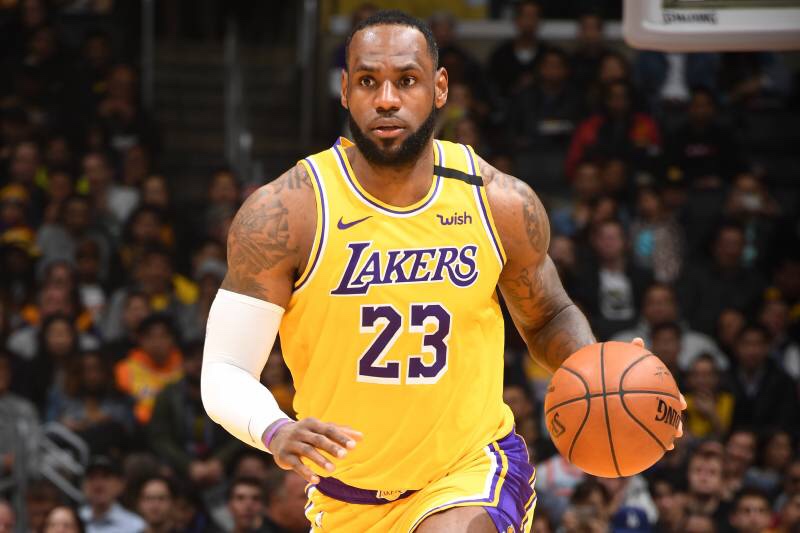
Lebron James is a professional basketball player for the LA Lakers. He has many accomplishments like receiving NBA championships, NBA MVP awards and many others. He even built a school in his hometown. His qualities includes leadership,hardworking and courageous.With his talent for basketball, Lebron James was the first player to be picked for the 2003 NBA Draft straight out of high school. The Cleveland Cavaliers signed him to join their team.Outside of the NBA, he established the “LeBron James Family Foundation” in 2004 to help out children and single-parent families in need.Kilmartin Smiler in their textbook The Masculine Self, men are expected to be task-oriented,they are supposed to hide their own fears and weaknesses. Lebron James does the opposite by being inspirational towards his fans and loving his family even if he looks like a “tough guy” on the outside.Brannon’s Themes of masculinity in terms of status and achievement fits when describing Lebron’s status and achievements of since he became known and successful in the NBA.